Kojic Acid, Niacinamide, Glycolic Acid & L-Glutathione,
Description
Uneven pigmentation is due to sunlight, hormones, previous skin inflammation and other factors.A good skin care routine may help improve the look of the skin, but the results depend on the underlying cause.
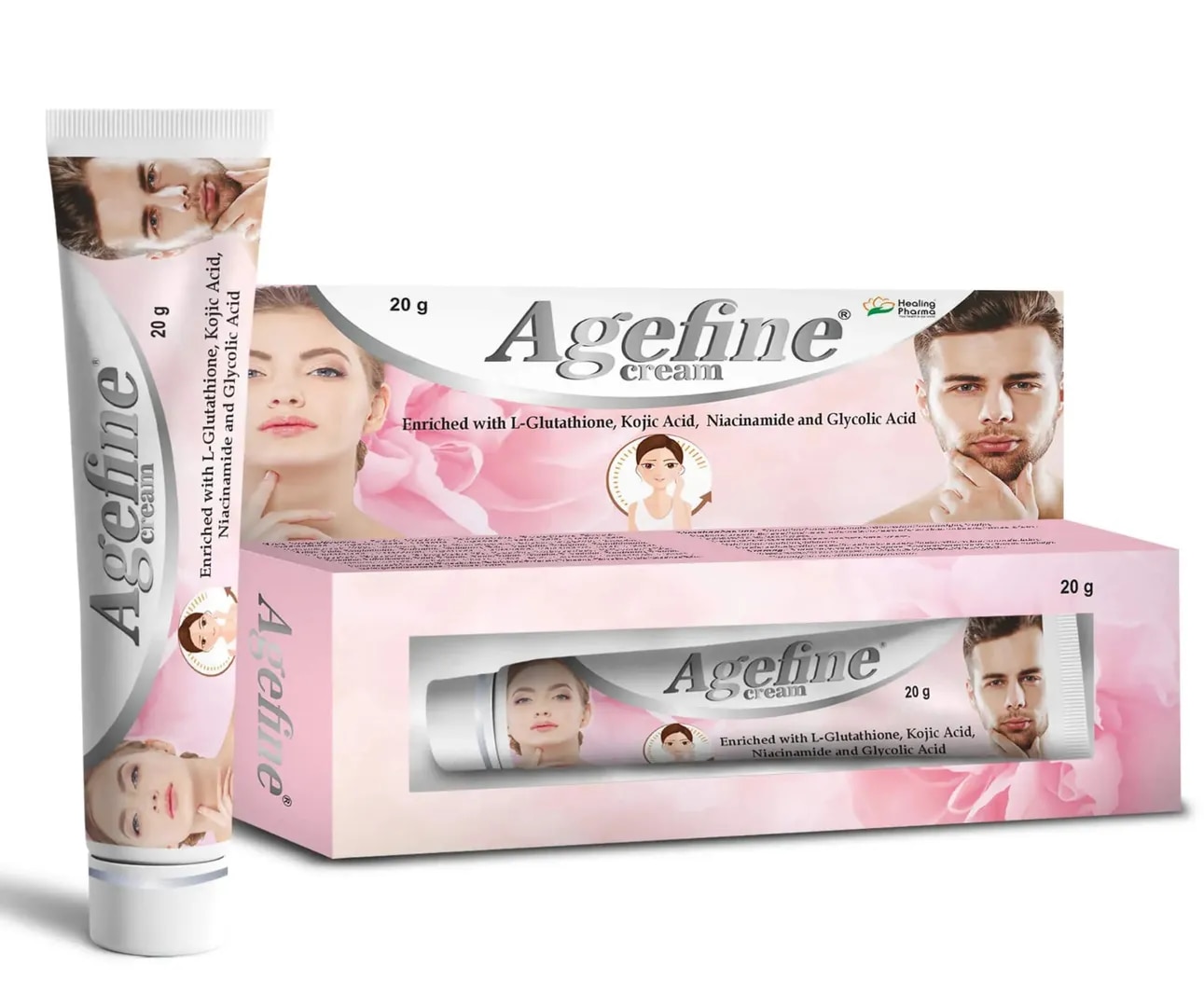
Agefine Cream is a combination of ingredients with different skincare functions.Kojic Acid is known for reducing melanin production, Niacinamide helps with the skin barrier, Glycolic Acid promotes exfoliation and L-Glutathione is known for its antioxidant properties.
The cream is available in a 20g tube with Healing Pharma branding. It is positioned as a skincare product for people seeking a more even-looking complexion.
Product Specifications:
Product Name: Agefine Cream
Pack Size: 20g
Application: External Use
Dosage Form: Topical Cream
Product Category: Skin Tone Care / Skincare Cream
Packaging: 20g Tube with Outer Carton
Side Effects
Possible Reaction:
Mild redness
Burning or stinging
Dryness
Itching
Peeling
Contact dermatitis
Increased sun sensitivity
What to Know:
May occur when the skin is sensitive to active ingredients
Can occur after application, particularly on irritated skin
Glycolic Acid may contribute to dryness or flaking
May indicate local irritation or sensitivity
Can occur with exfoliating ingredients
Kojic Acid or other ingredients may trigger allergic reactions
Glycolic Acid-containing products may increase susceptibility to sun-related irritation
Uses
Care for Uneven-Looking Skin Tone
Agefine Cream contains ingredients commonly included in skincare products intended to improve the appearance of uneven pigmentation.
Dull skin tone
Glycolic Acid, used at the right concentration and pH, can help to clear away built-up dead surface cells, leaving the skin surface looking smoother.
Dark marks appear
Kojic Acid and Niacinamide are used in formulations to address pigmentation-related issues. Their effectiveness in Agefine Cream has not been independently established.
Support Skin Barrier
Niacinamide is associated with supporting the skin barrier and reducing moisture loss in appropriately formulated products.
Texture-Driven Skincare
Niacinamide + Glycolic Acid This pairing could be worth investigating in skincare routines concerned with roughness and uneven surface texture.
General Facial Skincare
Agefine Cream may be incorporated into a skincare routine when suitable for the user's skin and used according to the product label.
Mechanism of Action
L-Glutathione – Antioxidant Function
Glutathione is a naturally occurring tripeptide involved in antioxidant defence. It has also been investigated for its influence on melanin-related pathways, although evidence for cosmetic skin-lightening effects from topical products remains limited.
Kojic Acid – Formation of Pigments
Kojic Acid can inhibit tyrosinase, an enzyme that helps in the synthesis of melanin.This is why it is used in some products that are formulated to treat uneven skin tone.
Niacinamide – Skin Barrier and Pigment Transfer
Niacinamide is a form of vitamin B3 and helps the function of the skin barrier.Research also suggests it can reduce the transfer of melanosomes to surrounding skin cells which may help improve the appearance of pigmentation.
Glycolic Acid – Smoother Surface
Glycolic acid is an alpha-hydroxy acid that may promote shedding of dead surface skin cells. Its exfoliating action is dependent on concentration, pH and frequency of application.
Safety & Precautions
- For external use only on skin surfaces.
- Read entire ingredient list before using.
- Before regular use, perform a patch test.
- Not to be applied on broken, infected, sunburned or badly irritated skin.
- Do not get into eyes, lips or mucous membranes.
Don’t combine with strong exfoliating acids, retinoids or irritating skin care treatments without professional advice.
- Use broad-spectrum sunscreen during the day to protect your skin from the sun which can aggravate pigmentation;
- Those with eczema, rosacea or very sensitive skin should seek the advice of a dermatologist.
- Consult a healthcare professional before use if pregnant or breastfeeding, especially if unsure of what’s in the full formulation.
Share
To ensure quality of the product:
- Always close the tube tightly after use.
Do not get sun exposure• Store in a dry and cool place.
Keep cream in a dry, moisture-free place.
The tube opening should be kept free from contamination.
- Do not use the cream after the expiry date.
- Avoid contact with children.
How to Use:
1. Cleansing Gently cleanse the area to be treated with a mild soap.
2. Dry: Pat skin, don’t rub.
3. Apply: If the label allows and it’s appropriate for your skin, apply a small amount of Agefine Cream to the recommended area.
4. Do not apply cream to the eyes, lips and broken skin. Avoid sensitive areas.
5. Directions: Use as directed on product label, or as directed by your dermatologist.
6. Protect: Use a good moisturizer and a day-time sunscreen in your skin care routine.
Frequently Asked Questions (FAQs)
1. What is Agefine Cream 20g for?
Agefine Cream is a skin care formulation that contains ingredients associated with care for uneven skin tone, surface exfoliation, and support for skin barrier.
2. What are the ingredients of Agefine Cream?
Niacinamide, glycolic acid, kojic acid, L-glutathione. The exact concentrations are not visible in the shown image
3. Does Agefine Cream help to reduce dark spots?
A few of its ingredients are used in skin care products aimed at pigmentation. However, the extent of improvement with this particular product is not known and persistent dark spots may require dermatological evaluation.
4. Is Agefine Cream good for oily skin?
Suitable depends on total cream base, individual skin type and tolerance. Make sure you read the entire formula if you have oily or acne-prone skin.
5. Can I use Agefine Cream with vitamin C or retinol?
Combining active products can cause increased irritation. A dermatologist can tell you if you should be using these ingredients together or separately.
6. Does Agefine Cream permanently whiten the skin?
No permanent skin-whitening result has been established for this product. Our natural skin color is caused by our genes and other biological factors.