Skin Inflammation Tacrolimus 0.1% w/w Cream
Description
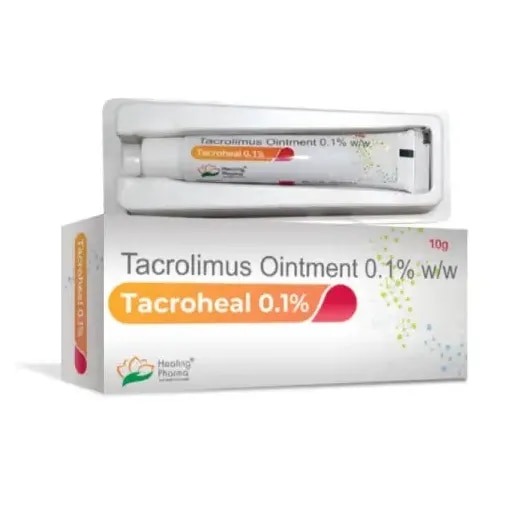
Tacroheal 0.1% Ointment is a topical prescription medicine containing Tacrolimus 0.1% w/w. It is used to manage moderate to severe atopic dermatitis (eczema) in suitable patients, particularly when conventional treatments have not provided adequate results or are not advisable.
Tacrolimus belongs to a group of medicines called topical calcineurin inhibitors. Unlike corticosteroid creams, it helps control skin inflammation without causing steroid-related skin thinning.
Product Specifications
Product Name: Tacroheal 0.1% Ointment
Generic Name: Tacrolimus
Composition: Tacrolimus 0.1% w/w
Dosage Form: Topical Ointment
Pack Size: 10g
Recommended Age Group: Adults and Adolescents 16 Years and Above
Packaging: Tube with Outer Carton
Mechanism
Tacroheal 0.1% Ointment works by reducing inflammatory activity in the skin.
Tacrolimus inhibits an enzyme called calcineurin, which is involved in activating certain immune cells. By blocking this pathway, it reduces the release of inflammatory substances responsible for eczema symptoms.
This action helps:
- Reduce skin redness and inflammation.
- Relieve itching associated with atopic dermatitis.
- Control eczema flare-ups.
- Support the recovery of inflamed skin.
Tacrolimus is a non-steroidal medicine and does not cause the skin thinning associated with prolonged topical corticosteroid use.
Uses
Tacroheal 0.1% Tacrolimus Ointment is primarily prescribed for:
- Atopic Dermatitis (Eczema): Helps manage moderate to severe eczema in suitable patients.
- Skin Inflammation: Reduces inflammation associated with atopic dermatitis.
- Eczema-Related Itching: Helps relieve itching and discomfort caused by eczema.
- Recurrent Eczema Flare-Ups: May be prescribed intermittently to control recurring symptoms.
- Steroid-Sparing Treatment: May be considered when topical corticosteroids are unsuitable or have not worked adequately.
Side Effects
Some patients may experience temporary reactions at the application site, especially during the initial days of treatment.
Common side effects:
- Burning or stinging sensation
- Skin itching or redness
- Warmth or irritation at the application site
- Tingling sensation
- Increased skin sensitivity
Other possible side effects:
- Folliculitis
- Acne-like skin changes
- Skin infections, including herpes infections
- Flushing or irritation after alcohol consumption
Seek medical attention if severe irritation, signs of infection, unusual skin changes, or an allergic reaction occurs.
Safety
- Use Tacroheal 0.1% Ointment only when prescribed by a qualified healthcare professional.
- The 0.1% strength is generally intended for patients aged 16 years and above.
- Do not apply to infected skin unless advised by a doctor.
- Avoid contact with the eyes, mouth, and other mucous membranes.
- Limit exposure to sunlight and avoid tanning beds or ultraviolet light therapy during treatment.
- Do not cover treated areas with airtight dressings unless instructed.
- Patients with weakened immune systems should consult their doctor before use.
- Inform the doctor if pregnant, planning pregnancy, or breastfeeding.
- Long-term continuous use is not recommended. Follow the dermatologist's treatment schedule.
- Tacrolimus ointment carries warnings about rare reports of skin cancer and lymphoma. A causal relationship has not been established, but unnecessary prolonged use should be avoided.
Storage
Store Tacroheal 0.1% Ointment according to the temperature instructions printed on the original pack. Keep the tube tightly closed and protect it from excessive heat and direct sunlight.
Keep out of reach of children. Do not use after the expiry date.
FAQs
1. What is Tacroheal 0.1% Ointment used for?
Tacroheal 0.1% Ointment is prescribed for managing moderate to severe atopic dermatitis (eczema), particularly when other treatments are unsuitable or have not provided sufficient relief.
2. Is Tacroheal 0.1% Ointment a steroid?
No. It contains Tacrolimus, a non-steroidal topical calcineurin inhibitor that reduces skin inflammation.
3. Can Tacroheal 0.1% Ointment be used on the face?
A dermatologist may prescribe it for affected facial areas. It should be applied carefully, avoiding the eyes, mouth, and mucous membranes.
4. Can children use Tacroheal 0.1% Ointment?
The 0.1% strength is generally used for patients aged 16 years and older. It should not be used in younger children without appropriate specialist guidance.
5. How long does Tacroheal 0.1% Ointment take to work?
Some improvement may be noticed within the first week, although the response varies. Consult the prescribing doctor if symptoms do not improve or become worse.
6. Can Tacroheal 0.1% Ointment be used daily?
It may be prescribed for twice-daily application during active eczema treatment. The frequency and duration should follow the dermatologist's instructions. Continuous long-term daily use should be avoided.
Directions for Use
1. Wash your hands before applying the ointment.
2. Clean and gently dry the affected skin.
3. Apply a thin layer of Tacroheal 0.1% Ointment to the affected areas, usually twice daily or as prescribed.
4. Gently spread the ointment over the skin without excessive rubbing.
5. Avoid covering the treated area with airtight bandages.
6. Wash your hands after application unless your hands are being treated.
7. Avoid bathing, showering, or swimming immediately after application.
8. Stop using the ointment when the eczema has cleared, unless the doctor has prescribed an intermittent maintenance schedule.
Conclusion
Tacroheal 0.1% Tacrolimus Ointment 10g is a non-steroidal topical prescription medicine used for managing moderate to severe atopic dermatitis. Its calcineurin-inhibiting action helps reduce inflammation, itching, and redness associated with eczema.
For the Indian pharmaceutical market, Tacroheal 0.1% Ointment is a dermatology product relevant to licensed pharmacies, pharmaceutical wholesalers, distributors, and healthcare procurement teams. It should be supplied and used in accordance with applicable prescription medicine regulations and medical guidance.