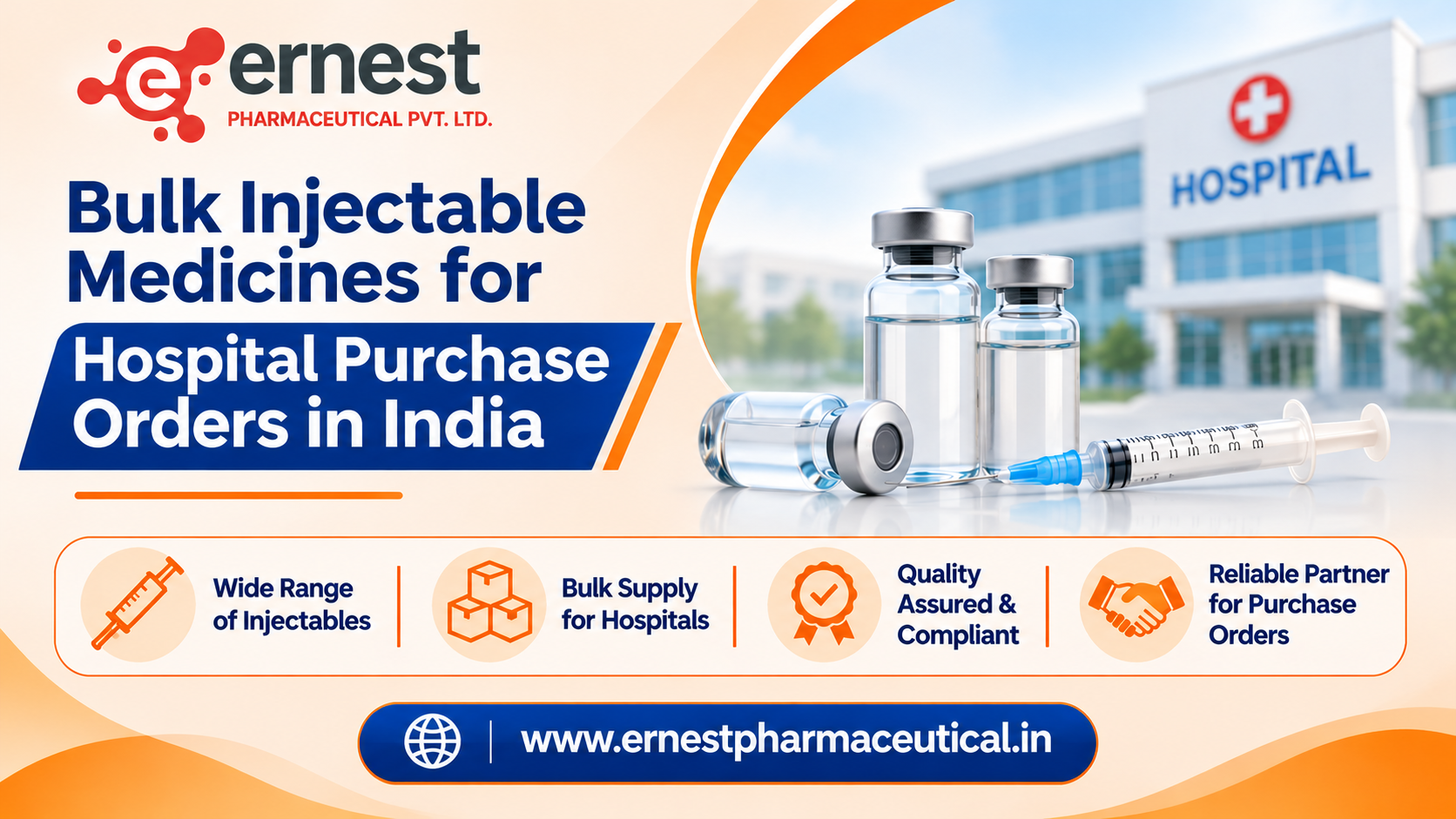
Bulk Injectable Medicines for Hospital Purchase Orders in India
A hospital pharmacy cannot afford to run out of an important injection when a patient needs treatment. Whether it is an antibiotic used in a medical ward, an emergency medicine kit in the ICU, or an anesthetic required for surgery, timely availability matters.
For hospital purchase managers, however, arranging injectable medicines is not simply about placing an order.
They need to consider the medicine's strength, manufacturer, batch details, storage requirements, quality documentation, and expected delivery schedule. Even a small mismatch in product specifications can create problems during hospital procurement.
Why Bulk Injectable Medicine Supply Matters for Hospitals
Injectable medicines are widely used across different hospital departments.
Hospitals commonly procure injections for:
Emergency and critical care
Intensive care units
Operational theaters
General medicine departments
Infectious disease treatment
Oncology departments
Cardiology and nephrology units
Postoperative care
Each department may have different product requirements.
Common Categories of Injectable Medicines Used in Indian HospitalsHospital injectable medicine procurement usually covers several therapeutic categories.
1. Antibiotic and Anti-Infective Injections
Injectable antibiotics are used in the treatment of selected bacterial infections when clinically indicated.
Common examples include:
Ceftriaxone Injection
Cefotaxime Injection
Meropenem Injection
Piperacillin and Tazobactam Injection
Cefoperazone and Sulbactam Injection
Vancomycin Injection
Amikacin Injection
The required medicine, strength, and quantity depend on the hospital's treatment protocols and prescribing requirements.
Emergency and Critical Care Injections
Emergency departments and intensive care units may require medicines for resuscitation, circulatory support, and other urgent clinical situations.
Anesthesia and Operation Theatre Medicines
Surgical hospitals need a planned supply of anesthesia-related medicines.
Requirements may include induction agents, local anesthetics, and other medicines used during procedures.
Certain products may be subject to additional prescription, storage, recordkeeping, or controlled-drug requirements.
Oncology Injectable Medicines
Cancer hospitals may require injectable medicines used in chemotherapy and supportive care.
cardiovascular and Supportive Care Injections
Hospitals may also procure injectable medicines for cardiovascular conditions, fluid management, electrolyte replacement, and other supportive treatments.
The required products depend on the hospital's departments and patient population.
How Hospitals Should Evaluate an Injectable Medicine Supplier
A supplier offering a competitive quotation may appear attractive, but price alone does not establish product quality or suitability.
Before approving a new hospital injectable medicine supplier, procurement teams should assess several factors.
Verify Pharmaceutical Licenses:
The first step is checking whether the supplier holds the licenses required for its particular business activities.
Indian buyers should verify applicable drug sale or distribution licenses and the legitimacy of the supplying business.
Depending on the product and transaction, additional regulatory requirements may apply. Relevant regulatory information can be obtained from the appropriate State Drug Control Authority and the Central Drugs Standard Control Organisation (CDSCO). Temperature-Sensitive Injectable Medicines Some injections require refrigerated storage or other controlled conditions.
Others may be stored at specified room temperatures. It is important not to assume that every injectable medicine needs the same temperature range.
Where temperature control is required, the supplier and buyer should agree on suitable transport arrangements and the evidence needed to assess storage conditions during shipment.
Bulk Injectable Medicine Supply for Institutional Buyers in India Different healthcare organizations have different procurement needs.
A multispecialty hospital may require several therapeutic categories in one purchase order.
A cancer hospital may focus on oncology and supportive medicines.
A pharmaceutical distributor may need repeated quantities of specific products for authorized onward distribution.
These differences influence product selection, quotation preparation, and delivery planning.
Ernest Pharmaceutical Pvt. Ltd. supports pharmaceutical sourcing and institutional supply enquiries from licensed healthcare businesses in India.
Product availability, commercial terms, manufacturer details, and documentation requirements are reviewed according to the specific enquiry.
Frequently Asked Questions
1. What are bulk injectable medicines?
Bulk injectable medicines refer to injectable pharmaceutical products purchased in larger commercial quantities by authorized healthcare organizations, hospitals, or distributors.
2. Who can purchase injectable medicines in bulk in India?
Eligible buyers may include licensed pharmaceutical distributors, wholesalers, hospitals, and other authorized healthcare organizations, subject to the applicable product and regulatory requirements.
3. What documents should hospitals check before purchasing injections?
Hospitals should verify applicable licenses, manufacturer information, product specifications, batch details, expiry dates, and relevant quality documentation.
4. Why is batch traceability important for injectable medicines?
Batch traceability helps identify affected stock during quality investigations, product recalls, and other supply chain issues.
5. Do all injectable medicines require refrigeration?
No. Storage requirements differ by product and formulation. Buyers should follow the specific manufacturer's approved instructions.
6. How can hospitals request a quotation for multiple injections?
Hospitals can prepare a consolidated requirement list containing medicine names, strengths, quantities, preferred manufacturers, delivery details, and documentation requirements.
7. What should hospitals check before accepting an injectable medicine delivery?
The receiving team should verify the product identity, quantity, packaging condition, batch number, expiry date, accompanying documents, and applicable transport conditions.
8. How can hospitals avoid injectable medicine shortages?
Regular stock reviews, realistic reorder levels, consumption forecasting, and advance communication with authorized suppliers can help reduce avoidable shortages.
Conclusion
Bulk injectable medicine procurement involves more than finding a supplier who can offer a competitive price.
For Indian hospitals, product quality, accurate specifications, batch traceability, documentation, and dependable procurement coordination all matter.
A structured purchasing process helps hospitals evaluate suppliers, manage inventory, and identify potential supply risks before they affect clinical operations.
By focusing on regulatory compliance and clear product requirements, healthcare organizations can make more informed decisions when sourcing injectable medicines.
Disclaimer: This article is intended for general pharmaceutical procurement education and legitimate B2B business information. It does not provide medical, prescribing, or legal advice. Product-specific requirements should be verified against current official regulations and appropriate professional guidance.
Keywords