Why Do I Keep Getting Pimples on My Face? Causes and Solutions
You wash your face regularly, try different skincare products and avoid touching your skin. Yet, just when one pimple disappears, another appears in almost the same place.
If this sounds familiar, you are not alone.
Recurring pimples on the face can be frustrating, especially when breakouts leave behind dark marks or affect your confidence. Some people notice acne around their periods, while others experience persistent spots on their forehead, cheeks or jawline.
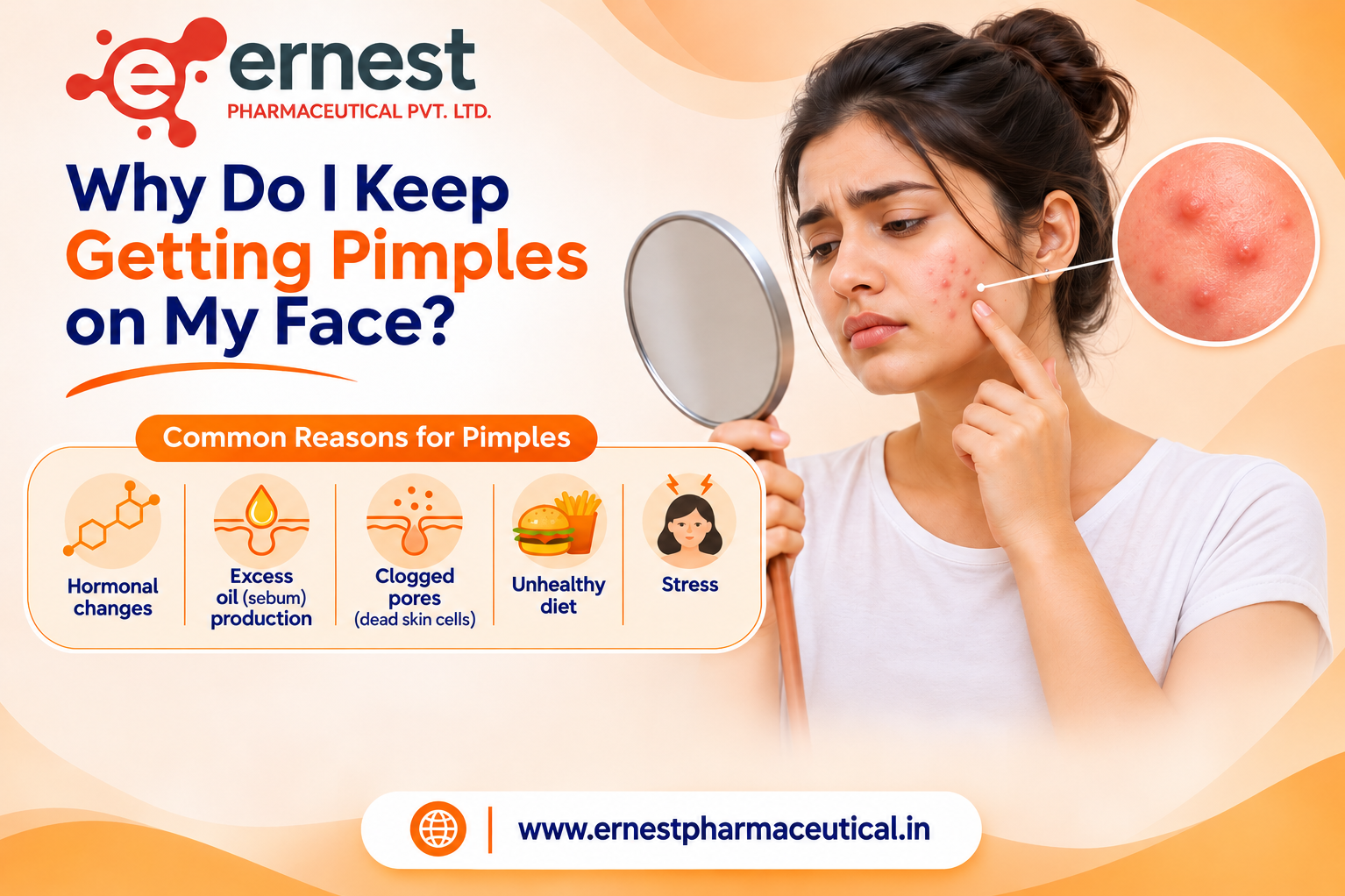
The reason is not always poor hygiene or oily skin. Acne develops through a combination of excess oil production, blocked hair follicles, inflammation and the activity of naturally occurring skin bacteria.
What Causes Pimples on the Face?
Your skin contains thousands of tiny hair follicles, many of which are connected to sebaceous glands that produce an oily substance called sebum.
However, acne may develop when several processes occur together.
Excess sebum production: Overactive sebaceous glands can contribute to oily skin and clogged follicles.
Accumulation of dead skin cells: Skin cells may build up inside a follicle instead of shedding normally.
Clogged hair follicles: Oil and dead skin cells can form a blockage, creating whiteheads or blackheads.
Skin bacteria and inflammation: Cutibacterium acnes, a bacterium normally found on the skin, can contribute to inflammation within blocked follicles.
Why Do Pimples Keep Coming Back?
Many people notice that acne improves temporarily but returns after a few days or weeks.
Hormonal Changes
Hormones called androgens can stimulate sebaceous glands to produce more oil. Hormonal changes during puberty, menstrual cycles and certain medical conditions may contribute to acne. Some adults experience recurring breakouts around the chin and jawline, particularly before menstruation. However, acne location alone cannot confirm a hormonal cause.
Hormonal Changes
Hormones called androgens can stimulate sebaceous glands to produce more oil.
Hormonal changes during puberty, menstrual cycles and certain medical conditions may contribute to acne.
Some adults experience recurring breakouts around the chin and jawline, particularly before menstruation. However, acne location alone cannot confirm a hormonal cause.
Oily or Acne-Prone Skin
People with naturally oily skin may have a greater tendency towards blocked follicles. Still, oily skin does not automatically mean someone will develop acne. Genetics and inflammation also play important roles.
Skincare Products That Clog Pores
Some heavy cosmetic products, oils and hair-styling preparations may contribute to breakouts in susceptible individuals. Products labelled non-comedogenic are designed to be less likely to block pores, although no product can guarantee that acne will never occur.
Stress and Changes in Routine
Stress does not directly create every case of acne, but it may aggravate breakouts in some people. Changes in sleep, skincare habits and everyday routines can also influence how well acne is managed.
Diet and Individual Sensitivity
Some studies suggest an association between high-glycaemic dietary patterns and acne. Certain dairy products may also be associated with breakouts in some individuals, but evidence varies. This does not mean that eating one particular food will cause pimples in everyone. Restrictive diets are not a substitute for evidence-based acne treatment.
Common Problems
- My Pimples Disappear, But New Ones Keep Coming
This is one of the most common concerns among people with acne-prone skin. Acne treatments often need several weeks to reduce new lesions. A product that makes an existing pimple less noticeable does not necessarily prevent another follicle from becoming blocked. Consistent treatment may be more helpful than frequently changing products.
- I Get Pimples Around My Period
Hormonal fluctuations can influence oil production and inflammatory breakouts.If acne is accompanied by irregular periods, increased facial hair growth or other hormonal symptoms, a healthcare professional may consider evaluation for conditions such as polycystic ovary syndrome (PCOS).
- Why Do Pimples Leave Dark Marks?
Inflammation can stimulate excess pigment production, producing post-inflammatory hyperpigmentation. These marks are particularly noticeable in many medium-to-deep skin tones, including those commonly seen in India.
- Can Hot and Humid Weather Make Acne Worse?
Hot weather, sweating, friction and occlusive clothing may aggravate acne in some people. In humid conditions, gentle cleansing after heavy sweating and choosing suitable non-comedogenic products may help.
- I Wash My Face Often, So Why Do I Still Get Pimples?
Acne is not a sign that someone is failing to keep their skin clean.Washing too frequently or using harsh scrubs can cause irritation, dryness and additional discomfort.
Different Types of Pimples
- Whiteheads (Closed Comedones)
- Blackheads (Open Comedones)
- Papules
- Pustules
- Nodules
- Cystic Acne
Which Skincare Ingredients Are Commonly Used for Acne?
Acne treatment aims to reduce blocked follicles, inflammation and the formation of new lesions.
Several topical ingredients are commonly used.
Salicylic Acid
Salicylic acid helps exfoliate within pores and can be useful for blackheads and whiteheads.
Its effectiveness depends on the formulation, concentration and skin tolerance.
Benzoyl Peroxide
Benzoyl peroxide reduces acne-associated bacteria and helps manage inflammatory acne.
It may cause dryness, irritation or bleaching of fabrics.
Adapalene
Adapalene is a topical retinoid that helps normalise skin cell turnover inside hair follicles.
It is commonly used for comedonal and inflammatory acne.
Retinoids can initially cause irritation and should be used according to professional advice. Topical retinoids are generally avoided during pregnancy.
Azelaic Acid
Azelaic acid may help reduce inflammatory acne and can be useful when post-acne pigmentation is also a concern.
Topical Antibiotics
Certain prescription topical antibiotics may be used for inflammatory acne.
They are generally combined with benzoyl peroxide or other appropriate treatment rather than used alone, to reduce antibiotic resistance.
Understanding Acne Medicines and Dermatology Products in India
Pharmacies, healthcare professionals and pharmaceutical procurement teams need accurate product information when dealing with dermatology medicines.
Products used for acne can differ in their active ingredients, strengths, dosage forms and prescription requirements.
For example, a benzoyl peroxide gel, adapalene formulation and oral antibiotic do not serve identical purposes.
Before sourcing or dispensing acne medicines, relevant considerations include:
- Active ingredient and concentration.
- Topical or oral dosage form.
- Manufacturer and applicable licence details.
- Batch number and expiry date.
- Product-specific storage instructions.
- Approved labelling and safety precautions.
- Prescription status and relevant quality documentation.
Antibiotic-containing products and oral retinoids require particular attention to appropriate prescribing and safe use.
Frequently Asked Questions
1. Why do I keep getting pimples in the same place?
Pimples may recur in the same area because certain follicles remain prone to blockage and inflammation. Hormonal influences, friction or skincare products may also contribute. Repeated painful lesions in exactly the same spot should be assessed by a dermatologist.
2. Can oily skin cause frequent acne breakouts?
Yes. Excess sebum production can contribute to blocked follicles and acne. However, oily skin is only one factor. Genetics, inflammation, bacteria and hormonal changes also influence breakouts.
3. Why do pimples return after treatment?
Acne can return when underlying factors remain active or maintenance treatment is stopped. Some people require ongoing topical treatment to reduce new breakouts. Recurrence does not always mean the previous treatment was ineffective.
4. Can sunscreen cause pimples?
Some sunscreen formulations may contribute to clogged pores or irritation in susceptible people. Choosing a non-comedogenic sunscreen suitable for acne-prone skin can help. Sun protection remains important, particularly when using acne treatments that increase skin sensitivity.
5. Which skincare ingredients are commonly used for acne?
Common ingredients include benzoyl peroxide, salicylic acid, adapalene and azelaic acid. Prescription topical antibiotics may also be used in combination with other treatments. The best option depends on acne type and skin tolerance.
6. When should I consult a dermatologist for recurring pimples?
Consult a dermatologist if acne is painful, persistent, scarring, leaving significant dark marks or not improving after an appropriate treatment period. Professional advice is also valuable when breakouts affect confidence or emotional wellbeing.
7. Can stress cause pimples on the face?
Stress may worsen existing acne by influencing hormones and inflammation. However, it is not the only cause of pimples. Hormonal changes, excess oil production and clogged pores also contribute to breakouts.
8. How long does it take for acne treatment to show results?
Most acne treatments take around 6–8 weeks to show noticeable improvement. Some people need up to 12 weeks or longer. Results depend on acne severity, treatment choice and consistent use.
9. Does drinking more water help prevent pimples?
Adequate hydration supports general skin health, but drinking extra water does not directly prevent or cure acne. A suitable skincare routine and appropriate treatment are more important for controlling recurring breakouts.
10. Can pimples leave permanent scars on the face?
Yes. Deep or severe inflammatory acne can sometimes cause permanent scars. Picking or squeezing pimples may increase this risk. Early, appropriate treatment can help reduce scarring.
Conclusion
Recurring pimples are not always the result of poor skincare or insufficient cleansing.
Acne develops through several interacting processes, including oil production, follicular blockage, bacterial activity and inflammation.
Hormonal changes, genetics and individual skin sensitivities may influence how often breakouts occur.
Understanding different acne types can help people recognise when basic skincare may be sufficient and when medical treatment is needed.
For mild acne, appropriate topical products and a consistent routine may be helpful. More severe or persistent cases may require prescription treatment under dermatological supervision.
Keywords