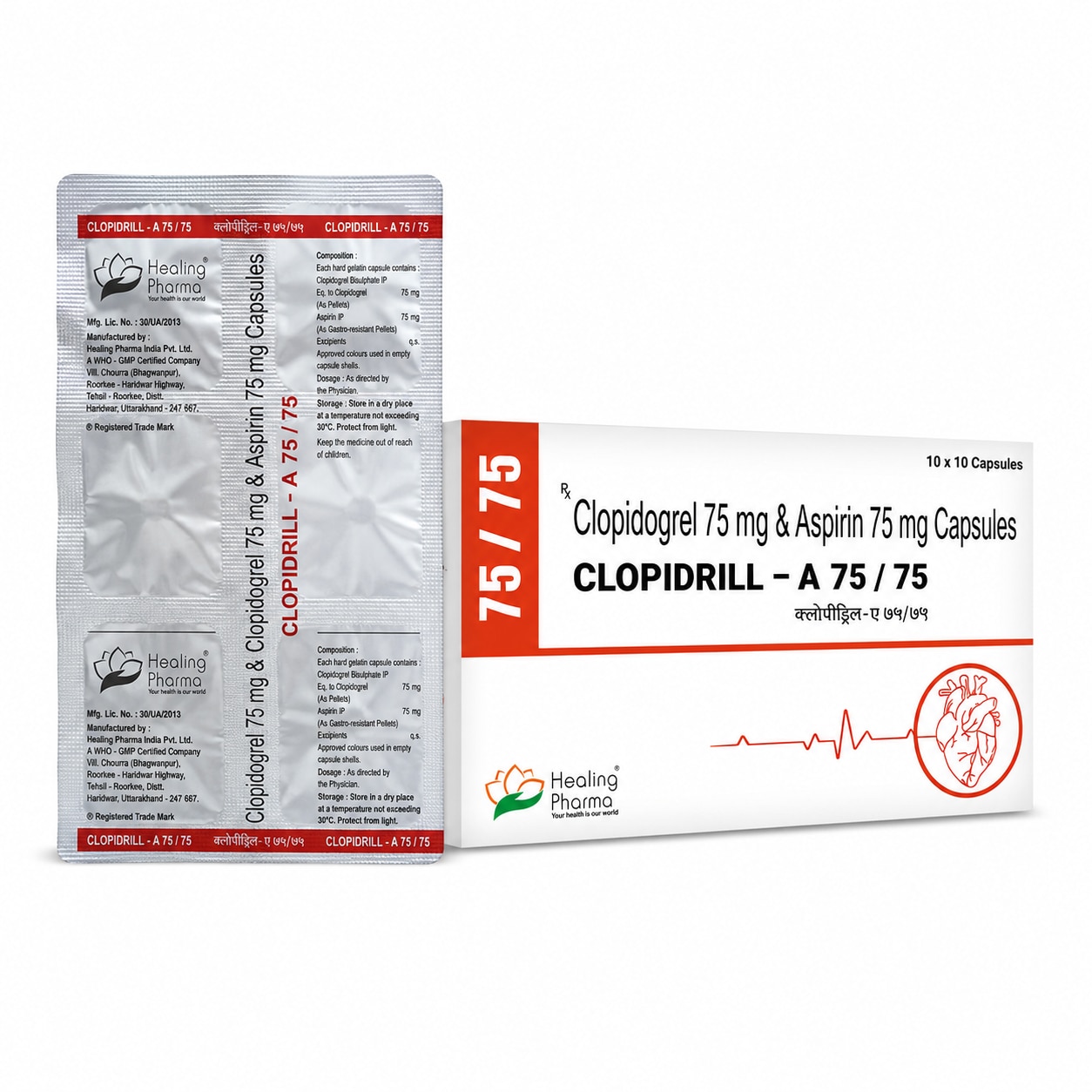


Description
Product details
Clopidogrel 75 mg + Aspirin 75 mg Clopidrill A 75/75 is a dual antiplatelet medicine containing Clopidogrel 75 mg and Aspirin 75 mg. Both ingredients reduce platelet activity, but they work through different pathways. The combination may be prescribed for selected patients who require stronger antiplatelet protection as part of the prevention of atherothrombotic cardiovascular events. Clinical Importance of Dual Antiplatelet Therapy Depending on the patient's condition and applicable prescribing guidance, Clopidogrel + Aspirin may be used in selected cardiovascular situations such as: Acute coronary syndrome Following certain coronary interventions or stent placement Secondary prevention after specific ischemic cardiovascular events Other situations where dual antiplatelet treatment is clinically indicated The duration of dual therapy is important. It should be determined by a clinician according to the patient's ischemic risk, bleeding risk, cardiovascular history, and procedure status. Side Effects Because both ingredients affect platelet function, bleeding-related effects deserve particular attention. More Commonly Encountered Easy bruising Nosebleeds Gum bleeding Indigestion or abdominal discomfort Nausea Diarrhea Increased bleeding after minor cuts More Serious Warning Signs Medical attention is important if a patient develops: Black or tarry stools Blood in urine Vomiting or coughing blood Bleeding that does not stop Severe unexplained headache Sudden neurological symptoms Marked weakness or pallor associated with possible blood loss Rare but serious blood disorders can also occur with Clopidogrel. Precautions Before Using Clopidrill A Existing Bleeding The combination is generally unsuitable in the presence of active pathological bleeding, such as significant gastrointestinal or intracranial bleeding. Previous Stomach Ulcer A history of peptic ulcer or gastrointestinal bleeding can increase the importance of GI-risk assessment. Aspirin Sensitivity Patients with previous serious hypersensitivity reactions to Aspirin or certain NSAIDs require careful evaluation. Liver or Kidney Problems Significant hepatic or renal impairment may influence bleeding risk and treatment decisions. Planned Surgery Doctors, dentists, and surgeons should know that the patient is receiving dual antiplatelet therapy before an invasive procedure. Safety Focus: Do Not Stop Without Advice This point is particularly important for patients taking dual antiplatelet therapy after coronary stent placement or an acute coronary event. Stopping Clopidogrel or Aspirin prematurely can remove antiplatelet protection and may increase the risk of serious thrombotic complications. Clopidrill A should not be started, interrupted, or discontinued without clinician guidance. Storage & Handling For maintaining product quality: Keep tablets in their original packaging until required. Store according to the temperature conditions stated on the product label. Protect the medicine from excessive heat and moisture. Keep away from direct environmental exposure. Store out of the reach of children. Do not use tablets with damaged packaging or after the stated expiry date. Do not transfer tablets into unsuitable containers for prolonged storage. FAQs What is the main purpose of Clopidrill A 75/75? It provides dual antiplatelet activity for selected patients who require both Clopidogrel and low-dose Aspirin as part of cardiovascular event prevention. Are Clopidogrel and Aspirin the same type of medicine? Both are antiplatelet agents, but they inhibit platelet activation through different molecular pathways. Why is bleeding the main safety concern? Both ingredients reduce platelet function, so the body's ability to form a platelet plug after an injury is reduced. Can Clopidrill A cause stomach bleeding? Yes. Aspirin can irritate the gastrointestinal tract, and dual antiplatelet activity can increase the severity of bleeding if it occurs. Should Clopidrill A be stopped before surgery? The treating clinician or surgeon should decide this. Patients should not discontinue dual antiplatelet treatment independently.