

Description
Product details
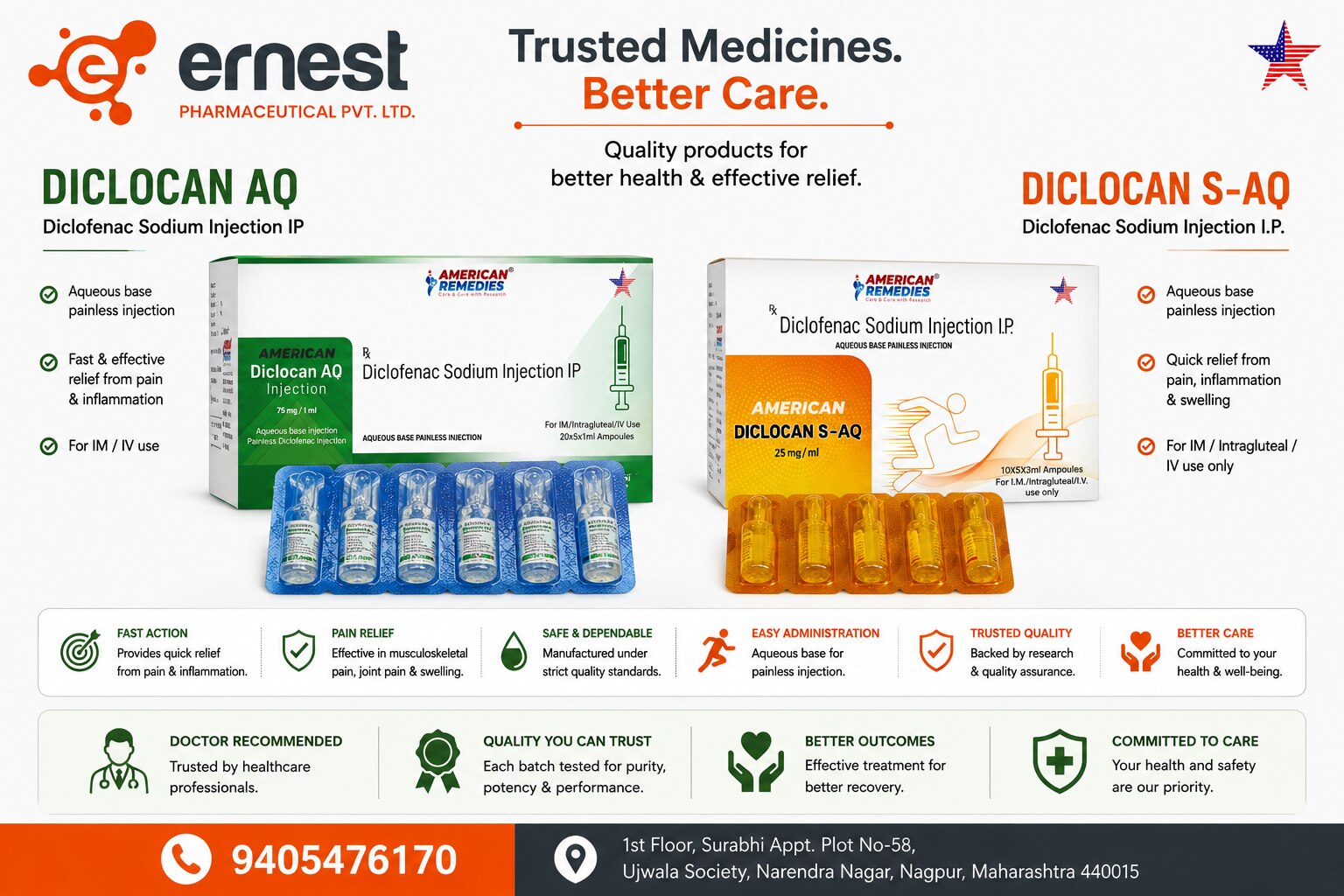
Diclocan AQ Injection & Diclocan S-AQ Injection Generic Name: Diclofenac Sodium Injection IP Diclocan AQ Injection and Diclocan S-AQ Injection contain Diclofenac Sodium, a non-steroidal anti-inflammatory drug (NSAID) used for short-term management of acute pain and inflammation when injectable treatment is considered appropriate. Diclofenac works by inhibiting cyclooxygenase (COX) enzymes, thereby reducing the formation of prostaglandins involved in pain, inflammation, and fever. The exact strength, concentration, and differences between the AQ and S-AQ formulations should be confirmed from their respective product labels. Dosage Diclofenac Sodium Injection should be administered only by a qualified healthcare professional. The appropriate dose, route, frequency, and duration depend on: Severity and type of pain Patient's age and medical condition Other NSAIDs or diclofenac products being used Kidney and liver function Cardiovascular and gastrointestinal risk factors Injectable diclofenac is generally intended for short-term treatment. The specific route of administration must follow the approved instructions for the individual formulation. Precautions Avoid use in patients with known hypersensitivity to diclofenac, aspirin, or other NSAIDs where contraindicated. Inform the doctor about a history of stomach ulcers or gastrointestinal bleeding. Extra caution is required in patients with heart, kidney, or liver disease. Inform the healthcare professional about asthma or previous NSAID-related allergic reactions. Tell the doctor about anticoagulants, antiplatelet medicines, other NSAIDs, and other medications being used. Avoid using multiple diclofenac-containing products unless specifically prescribed. Pregnancy requires medical assessment; NSAIDs have important restrictions, particularly later in pregnancy. Side Effects Possible side effects include: Injection-site pain or reaction Nausea Vomiting Indigestion Abdominal discomfort Headache Dizziness Diarrhea More serious adverse effects can include gastrointestinal bleeding or ulceration, kidney impairment, cardiovascular complications, severe allergic reactions, and serious skin reactions. Warning Diclocan AQ and Diclocan S-AQ Injections should be administered under medical supervision. Diclofenac should generally be used at the lowest effective dose for the shortest appropriate duration. Seek urgent medical attention if symptoms such as black stools, vomiting blood, severe abdominal pain, chest pain, breathing difficulty, facial swelling, markedly reduced urine output, or severe skin reactions occur. FAQ 1. What are Diclocan AQ and Diclocan S-AQ Injections used for? They contain diclofenac and are used for short-term management of acute pain and inflammation when injectable NSAID treatment is appropriate. 2. What do both injections contain? Both products are listed as containing Diclofenac Sodium Injection IP. 3. How does Diclofenac Sodium work? It inhibits COX enzymes and reduces prostaglandin production, thereby decreasing pain and inflammation. 4. What is the difference between Diclocan AQ and Diclocan S-AQ? Both are listed as Diclofenac Sodium Injection IP. The information provided does not establish the specific formulation difference, so this should be verified from the respective product labels. 5. What are common side effects? Injection-site discomfort, nausea, indigestion, abdominal discomfort, headache, dizziness, and diarrhea may occur. 6. Can Diclocan Injection be combined with other Diclofenac medicines? Combining multiple diclofenac or other NSAID products can increase the risk of adverse effects. Such combinations should only be used when specifically directed by a healthcare professional.