

Description
Product details
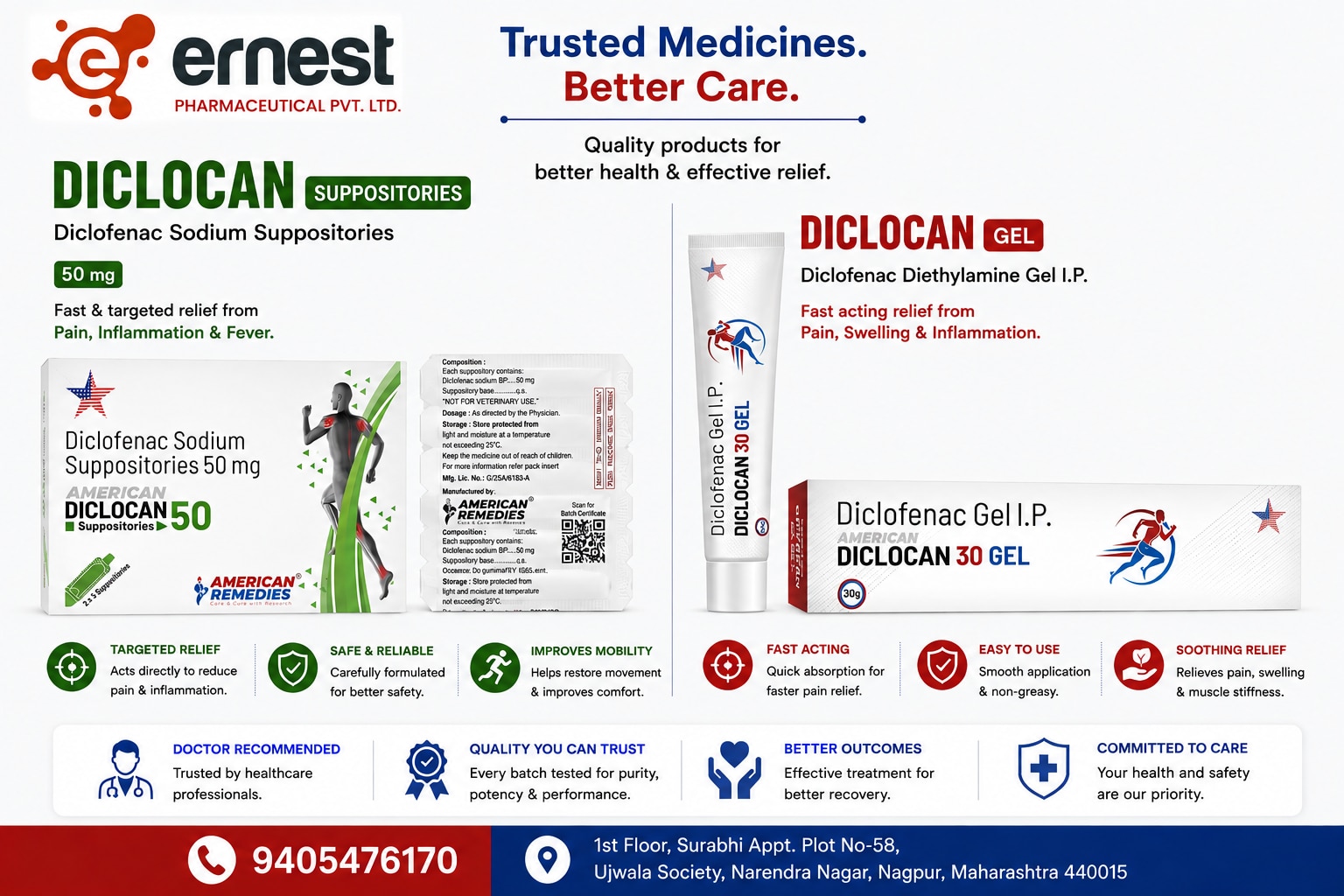
DICLOCAN Suppositories & Diclocan Gel Diclocan is available in different topical/rectal formulations containing diclofenac. Diclocan Suppositories contain Diclofenac Sodium, while Diclocan Gel contains Diclofenac Diethylamine. Diclofenac is a non-steroidal anti-inflammatory drug (NSAID) that helps reduce pain and inflammation by decreasing the production of prostaglandins involved in inflammatory responses. Diclocan Suppositories provide systemic diclofenac through rectal administration, whereas Diclocan Gel is applied directly to the affected area for localized relief of musculoskeletal pain and inflammation. Available Forms Product Active Ingredient Dosage Form Route Diclocan Suppositories Diclofenac Sodium Suppository Rectal Diclocan Gel Diclofenac Diethylamine Gel Topical / External The exact strength of each formulation should be confirmed from the individual product pack. Dosage / Directions for Use Diclocan Suppositories The suppository is intended for rectal use only. Dose and frequency should be determined according to the patient's condition, age, total daily diclofenac exposure, and physician's instructions. Diclocan Gel Apply a suitable amount to the affected area and gently rub into the skin according to the product labeling or healthcare professional's directions. Wash hands after application, unless the hands themselves are being treated. Avoid exceeding the recommended frequency or duration. Precautions Avoid use in patients with a known hypersensitivity to diclofenac, aspirin, or other NSAIDs where contraindicated. Inform the doctor about previous stomach ulcers or gastrointestinal bleeding. Patients with heart, kidney, or liver conditions should seek medical advice. Do not combine different diclofenac or NSAID products without professional advice. Diclocan Gel should not be applied to broken, infected, or damaged skin. Keep the gel away from the eyes, mouth, and mucous membranes. Pregnancy requires medical assessment, particularly because NSAIDs have important restrictions later in pregnancy. Side Effects Suppositories Possible effects include: Nausea Indigestion Abdominal discomfort Diarrhea Headache or dizziness Rectal irritation Gel Possible local reactions include: Skin redness Itching Dryness Rash Burning or irritation at the application site Serious gastrointestinal, cardiovascular, kidney, or allergic reactions are possible with systemic diclofenac exposure. Warning Diclocan Suppositories are for rectal use and Diclocan Gel is for external use only. Do not swallow either formulation. Avoid applying the gel near the eyes or on damaged skin. Seek medical attention for severe allergic reactions, breathing difficulty, significant skin reactions, gastrointestinal bleeding, chest pain, or other serious symptoms. FAQ 1. What are Diclocan Suppositories used for? They are used to help manage pain and inflammation where rectal diclofenac treatment is considered appropriate. 2. What does Diclocan Gel contain? Diclocan Gel contains Diclofenac Diethylamine. 3. What is the difference between Diclocan Suppositories and Gel? The suppositories contain Diclofenac Sodium and are administered rectally, while the gel contains Diclofenac Diethylamine and is applied externally for localized treatment. 4. Where can Diclocan Gel be applied? It is applied to appropriate intact skin over the affected painful or inflamed area. Avoid wounds, eyes, and mucous membranes. 5. Can Diclocan Gel and Suppositories be used together? Using more than one diclofenac-containing medicine can increase total NSAID exposure. Combination use should therefore be determined by a healthcare professional. 6. What are common side effects of Diclocan Gel? Local effects such as redness, itching, dryness, rash, or irritation can occur.