

Description
Product details
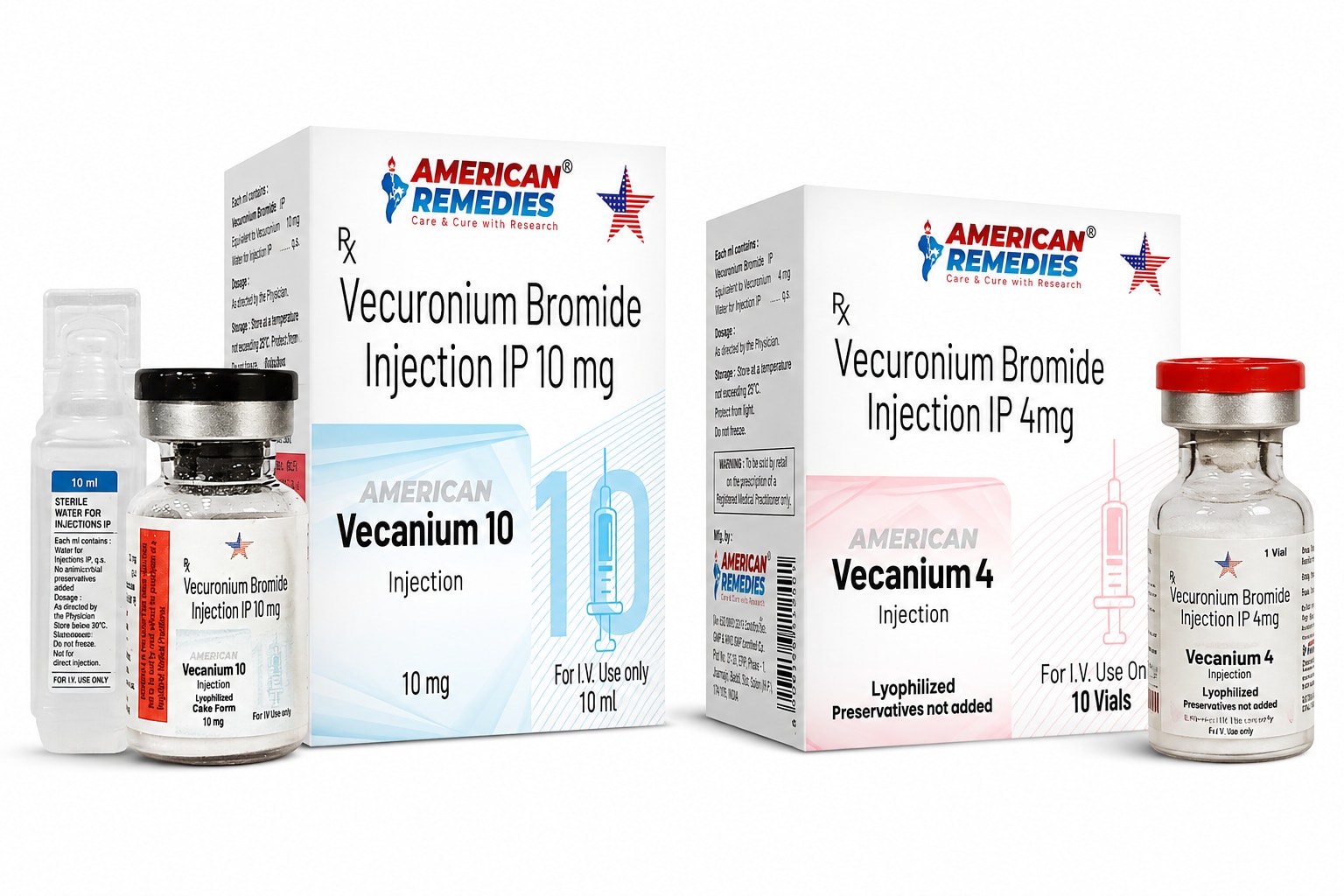
VECANIUM 10 Vecanium 4 mg Injection Active Substance: Vecuronium Bromide Medicine Type: Non-depolarizing Neuromuscular Blocking Agent Clinical Area: Anesthesia / Critical Care Dosage Form: Injection What Is Vecanium Designed to Do? Vecanium contains Vecuronium Bromide, a medicine used to produce controlled skeletal-muscle relaxation during anesthesia and other carefully managed clinical procedures. Unlike anesthetics or pain-relieving medicines, vecuronium does not make a patient unconscious and does not provide analgesia. Adequate anesthesia and/or sedation must therefore be provided separately. The Neuromuscular Block Concept Normally, a nerve releases acetylcholine, which activates receptors at the neuromuscular junction and causes muscle contraction. Vecuronium changes this sequence: Motor nerve signal → Acetylcholine released → Vecuronium competes at nicotinic receptors → Neuromuscular transmission is blocked → Skeletal muscles relax Its action is described as non-depolarizing because it blocks receptor activation without initially depolarizing the muscle membrane. Where Controlled Muscle Relaxation Helps In appropriately anesthetized patients, Vecuronium Bromide may be used to: Facilitate Tracheal Intubation Muscle relaxation can assist airway instrumentation under controlled anesthesia. Support Surgical Procedures It can provide skeletal-muscle relaxation when required during surgery. Assist Mechanical Ventilation In selected appropriately sedated patients, neuromuscular blockade may facilitate controlled ventilation. The actual indication and administration protocol should follow the approved product information and institutional anesthesia procedures. The Airway Is the Priority Vecuronium can paralyze the muscles required for breathing. Administration must therefore occur only where clinicians can provide: Ventilatory support • Oxygenation • Airway management • Neuromuscular monitoring • Emergency resuscitation Spontaneous breathing must not be assumed to remain adequate after administration. Signs of Excessive or Prolonged Blockade The most clinically significant effect is prolonged neuromuscular paralysis, which can lead to extended respiratory weakness or apnea. Other potential reactions include: Residual muscle weakness Changes in heart rate or blood pressure Bronchospasm Flushing Injection-related reactions Rare severe hypersensitivity or anaphylactic reactions Questions 1. Is Vecanium an anesthetic? No. Vecuronium is a neuromuscular blocker. Anesthesia must be provided separately. 2. Why is ventilation equipment necessary? The medicine can paralyze respiratory muscles, making assisted or controlled ventilation necessary until adequate recovery occurs. 3. Can Vecanium help with intubation? Yes. Vecuronium may be used to facilitate tracheal intubation when neuromuscular relaxation is clinically required. 4. Does a patient feel pain after receiving Vecuronium? Vecuronium itself provides no analgesia or unconsciousness. Appropriate anesthesia and pain control are essential. 5. How do clinicians know when muscle function has recovered? Neuromuscular function can be assessed using clinical evaluation together with objective neuromuscular monitoring. 6. Are VECANIUM 10 and Vecanium 4 the same medicine? Both are identified as Vecuronium Bromide injections, but they represent different listed strengths/presentations. The exact vial concentration and formulation should be checked on each product pack.