
How Dapagliflozin Works in Type 2 Diabetes: Uses, Benefits and Side Effects
When someone is diagnosed with Type 2 diabetes, much of the conversation naturally focuses on food, exercise and insulin. But blood sugar control involves another important organ that often receives less attention: the kidneys.
Every day, the kidneys filter glucose from the blood and return most of it to the bloodstream. Dapagliflozin changes part of this process, allowing more glucose to leave the body through urine.
Doctors may prescribe it to help manage blood glucose in people with Type 2 diabetes. It also has proven benefits for certain patients with heart failure or chronic kidney disease.
Understanding what the medicine does, where it may help and what precautions matter can make discussions about diabetes treatment more meaningful.
How Does Dapagliflozin Lower Blood Sugar?
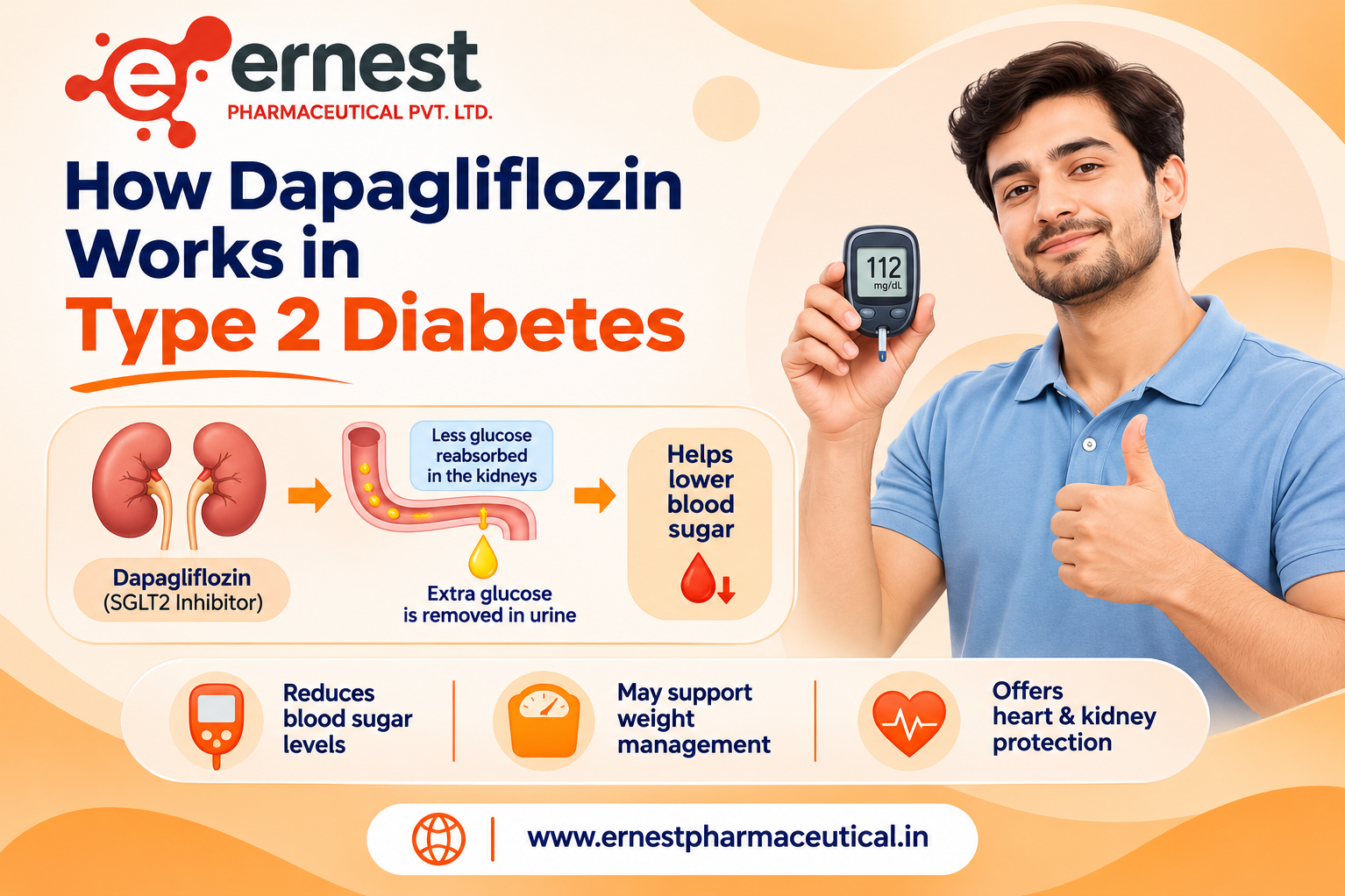
Imagine the kidneys as a filtering system. As blood passes through them, glucose is filtered along with water and other substances.
Because glucose is an important source of energy, the body normally reabsorbs almost all of this filtered glucose.
A protein called SGLT2 performs much of this reabsorption in the kidneys.
Dapagliflozin blocks this protein.
As a result, less glucose returns to the bloodstream and more passes out through urine.
What Happens After SGLT2 Is Blocked?
The process can be understood in four stages:
- Blood is filtered: Glucose enters the kidney's filtering system.
- Glucose reabsorption decreases: Dapagliflozin inhibits SGLT2 transporters.
- More glucose enters the urine: Some glucose that would normally return to the blood is excreted.
- Blood sugar may fall: Increased glucose elimination contributes to improved glycaemic control.
Unlike medicines that directly increase insulin secretion, this glucose-lowering mechanism does not require additional insulin release.
When Is Dapagliflozin Prescribed for Type 2 Diabetes?
Type 2 diabetes develops when the body cannot use insulin effectively or does not produce enough insulin to maintain normal blood glucose. Over time, persistently high glucose can damage blood vessels and affect the eyes, kidneys, nerves and cardiovascular system. Dapagliflozin may be considered when blood sugar remains above an individual's treatment target or when a patient has certain heart or kidney conditions that may benefit from an SGLT2 inhibitor.
Benefits of Dapagliflozin Beyond Blood Sugar Control:
Dapagliflozin is primarily recognised for its glucose-lowering mechanism, but its clinical benefits extend beyond diabetes management in certain patients.
1. Helps Improve Blood Glucose Control
By reducing glucose reabsorption, the medicine can lower fasting and overall blood glucose levels.
It may also help reduce HbA1c, a laboratory measure reflecting average blood glucose over approximately the previous two to three months.
The degree of improvement varies depending on kidney function, baseline blood glucose and other treatments.
2. May Support Modest Weight Reduction
Glucose contains calories. When more glucose is removed through urine, the body loses some of that energy.
This can result in modest weight reduction for some people.
However, Dapagliflozin is not intended as a general weight-loss medicine, and weight changes are not guaranteed.
3. Provides Benefits for Certain Heart Failure Patients
Heart failure occurs when the heart cannot pump blood as effectively as the body needs.
Dapagliflozin has demonstrated benefits in reducing worsening heart failure and certain related cardiovascular outcomes in appropriately selected patients.
These effects are not explained by blood sugar reduction alone.
4. May Slow Chronic Kidney Disease Progression
In eligible patients with chronic kidney disease, Dapagliflozin can help reduce the risk of further kidney function decline and some related complications.
This benefit involves changes in how the kidneys handle sodium, fluid and pressure within their filtering structures.
What Side Effects Should Patients Know About?
Side effect:
- Genital fungal infection
- Increased urination
- Dehydration
- Low blood pressure
- Urinary tract infection
- Low blood sugar
What patients may notice:
- Itching, irritation or unusual discharge
- More frequent visits to the toilet
- Thirst, dizziness or weakness
- Light-headedness, particularly when standing
- Burning urination, urgency or discomfort
- More likely when combined with insulin or certain other diabetes medicines
Serious Warning Signs
Some complications require urgent medical attention.
Diabetic ketoacidosis: Symptoms may include persistent nausea, vomiting, abdominal pain, unusual tiredness or rapid breathing. It can sometimes occur even when blood glucose is not markedly elevated.
Serious urinary infection: Fever, back pain or severe urinary symptoms may indicate an infection needing prompt assessment.
Severe dehydration: Persistent dizziness, fainting or an inability to maintain fluid intake needs medical attention.
A very rare but serious infection affecting the genital or surrounding tissue, called Fournier's gangrene, has also been reported with SGLT2 inhibitors.
Important Precautions Before Taking Dapagliflozin:
Not every person with Type 2 diabetes is a suitable candidate for Dapagliflozin.
Doctors usually consider several factors before prescribing it.
Kidney Function
Kidney function testing helps determine whether Dapagliflozin is suitable and whether its intended benefit is mainly glucose lowering, heart failure management or kidney protection.
Dehydration Risk
People who take diuretics, have low blood pressure or experience significant fluid loss may need additional monitoring.
Other Diabetes Medicines
Combining Dapagliflozin with insulin or medicines that increase insulin secretion may raise the risk of hypoglycaemia.
Surgery or Prolonged Fasting
Dapagliflozin may need to be temporarily withheld before certain procedures or during illness that increases the risk of ketoacidosis. Patients should follow their treating clinician's instructions.
Pregnancy and Breastfeeding
Dapagliflozin is generally avoided during pregnancy and breastfeeding because of potential risks.
Type 1 Diabetes
Dapagliflozin is not routinely indicated for Type 1 diabetes because of the increased risk of diabetic ketoacidosis.
Living With Type 2 Diabetes in India: What Else Matters?
Diabetes management is not limited to taking a daily tablet.
For many people in India, regular meals, working hours, travel, physical activity and access to follow-up care can influence how consistently they manage their condition.
This makes routine monitoring important.
Depending on their treatment plan, patients may need:
- HbA1c testing at intervals recommended by their doctor.
- Kidney function assessments, including eGFR.
- Urine albumin testing when indicated.
- Blood pressure monitoring.
- Regular eye and foot examinations.
- Review of medication adherence and possible side effects.
Product Information: Dapagliflozin
Generic Name: Dapagliflozin
Active Ingredient: Dapagliflozin
Medicine Class: SGLT2 Inhibitor
Therapeutic Category: Antidiabetic Medicine
Common Strengths: 5 mg and 10 mg
Dosage Form: Oral Tablet
Route of Administration: Oral
Main Therapeutic Use: Type 2 Diabetes Management
Other Clinical Uses: Certain Heart Failure and Chronic Kidney Disease Conditions
Prescription Status: Prescription-Only Medicine
Frequently Asked Questions About Dapagliflozin
1. What is Dapagliflozin used for?
Dapagliflozin helps manage blood glucose in Type 2 diabetes. It also has approved indications for certain heart failure and chronic kidney disease conditions, depending on the specific product and country.
2. How does Dapagliflozin work?
It blocks SGLT2 transporters in the kidneys, allowing more glucose to leave the body through urine.
3. Is Dapagliflozin 10 mg used for diabetes?
Yes. Dapagliflozin 10 mg may be prescribed for Type 2 diabetes when clinically appropriate. The strength should be determined by a healthcare professional.
4. Can Dapagliflozin help with weight management?
Some patients experience modest weight reduction, but it is not a substitute for appropriate weight-management treatment.
5. Does Dapagliflozin protect the kidneys?
It can slow chronic kidney disease progression in certain eligible patients. Its suitability depends on the person's medical condition and kidney function.
6. Can Dapagliflozin cause frequent urination?
Yes. The medicine increases urinary glucose excretion, which may also increase urine output.
7. Can Dapagliflozin be taken with Metformin?
Doctors may prescribe Dapagliflozin alongside Metformin when the combination is suitable for the individual patient.
8. Is Dapagliflozin safe for everyone with Type 2 diabetes?
No. Kidney function, dehydration risk, medical history and other medicines must be considered before prescribing it.
9. Can Dapagliflozin cause low blood sugar?
The risk is generally low when used alone, but it increases when combined with insulin or certain insulin-stimulating medicines.
10. What should pharmaceutical buyers check before purchasing Dapagliflozin tablets?
They should verify composition, strength, approved labelling, manufacturer details, batch information, expiry date and applicable quality documentation.
Conclusion:
Dapagliflozin offers a different approach to blood glucose management by acting on glucose reabsorption in the kidneys rather than directly stimulating insulin release.
For appropriate patients with Type 2 diabetes, it can help improve glucose control. Certain patients with heart failure or chronic kidney disease may also benefit from its additional clinical effects.
Still, the medicine requires careful use. Kidney function, dehydration risk, possible infections and other treatments all influence prescribing decisions.
Keywords