Asthma is a long-term respiratory condition that can make breathing difficult, particularly when the airways become inflamed or narrow. Some people experience occasional symptoms, while others struggle with frequent coughing, wheezing, chest tightness or shortness of breath.
Managing asthma involves more than relieving breathing discomfort when it happens. Long-term treatment may also be needed to control inflammation and reduce the risk of future asthma attacks.
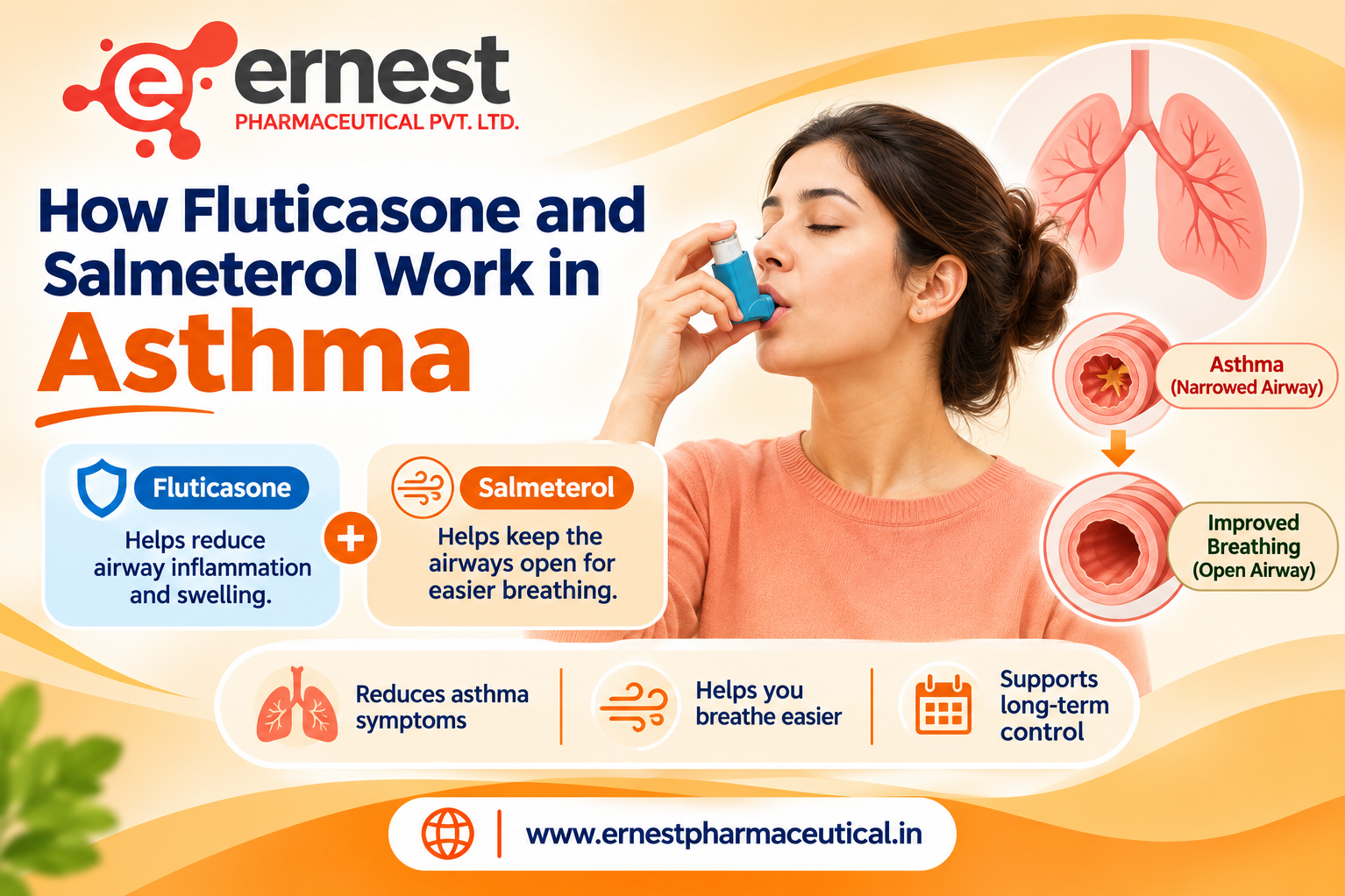
Fluticasone and Salmeterol inhalers combine two medicines that address different aspects of asthma. One helps reduce inflammation in the airways, while the other helps relax the muscles surrounding them.
What Is a Fluticasone and Salmeterol Inhaler?
A Fluticasone and Salmeterol inhaler is a prescription combination medicine used for the long-term management of asthma in patients for whom this treatment is appropriate.
It contains two active ingredients:
Fluticasone Propionate: An inhaled corticosteroid that reduces inflammation and swelling in the airways.
Salmeterol: A long-acting beta-2 agonist (LABA) that relaxes airway muscles and provides prolonged bronchodilation.
Fluticasone and Salmeterol – Medicine Information
Generic name: Fluticasone Propionate and Salmeterol
Therapeutic category: Respiratory medicine
Fluticasone drug class: Inhaled Corticosteroid (ICS)
Salmeterol drug class: Long-Acting Beta-2 Agonist (LABA)
Dosage form: Inhalation preparation
Administration route: Oral inhalation
Main therapeutic use: Maintenance treatment of asthma
How Does Fluticasone Help Control Asthma?
Inflammation plays an important role in asthma.
When the lining of the airways becomes inflamed, the breathing passages may swell, produce additional mucus and respond more strongly to environmental triggers.
Fluticasone helps control this inflammatory response.
By reducing inflammation over time, it can help the airways become less sensitive and may reduce the frequency of asthma symptoms.
Important Functions of Fluticasone
1. Reduces airway inflammation
Fluticasone acts locally in the respiratory tract to help control the underlying inflammation associated with asthma.
2. Helps reduce airway swelling
Controlling inflammation can help decrease swelling within the bronchial passages.
3. Supports long-term symptom control
Regularly prescribed inhaled corticosteroid treatment can reduce asthma symptoms and the risk of exacerbations.
4. Helps prevent future asthma flare-ups
Inhaled corticosteroids are an important part of preventive asthma therapy because they address inflammation rather than simply relaxing the airway muscles.
What Is the Role of Salmeterol in Asthma Treatment?
Salmeterol is a long-acting bronchodilator.
The airways contain smooth muscles that can tighten in people with asthma. This narrowing restricts airflow and may contribute to wheezing, coughing or difficulty breathing.
Salmeterol activates beta-2 receptors in airway smooth muscle, causing these muscles to relax.
How Salmeterol Supports Breathing
- Helps relax muscles surrounding the airways.
- Maintains bronchodilation for approximately 12 hours.
- Supports control of symptoms, including some nighttime symptoms.
- Complements the anti-inflammatory effect of inhaled corticosteroids.
Why Are Fluticasone and Salmeterol Used Together?
Asthma treatment often requires attention to two related problems: inflammation within the airways and tightening of the muscles around them.
Fluticasone helps manage inflammation, while Salmeterol helps maintain bronchodilation.
Their complementary actions may improve breathing symptoms and lung function in patients who need combination maintenance therapy.
For example, a patient may continue to experience symptoms despite using an inhaled corticosteroid correctly and consistently. A doctor may consider adding a long-acting bronchodilator after reviewing the patient's diagnosis, inhaler technique, treatment adherence and asthma control.
Benefits of Fluticasone and Salmeterol in Asthma Management
1 Improved Control of Asthma Symptoms : Regular maintenance treatment may reduce coughing, wheezing, chest tightness and breathing discomfort.
2 Better Airflow : The bronchodilator component helps maintain airway relaxation, while the corticosteroid component targets inflammation.
3 Reduced Nighttime Symptoms : Some people with asthma experience coughing or breathlessness during sleep. Effective asthma control may help reduce nighttime disturbances.
4 Lower Risk of Exacerbations : Appropriate inhaled corticosteroid-containing treatment helps reduce the risk of asthma attacks and related complications.
Fluticasone and Salmeterol: Controller or Rescue Inhaler?
Understanding the difference between maintenance and rescue medicines is essential for asthma safety.
A controller inhaler is prescribed to help maintain asthma control over time. It may be required regularly even when symptoms are not noticeable.
A rescue or reliever inhaler is intended to provide prompt symptom relief according to the patient's asthma treatment plan.
Fluticasone and Salmeterol is a maintenance combination, not an emergency rescue inhaler.
Patients who experience sudden breathing difficulty should follow their prescribed asthma action plan and use the appropriate reliever recommended by their healthcare professional.
How to Use a Fluticasone and Salmeterol Inhaler Correctly
Inhaler technique affects how much medicine reaches the lungs
Patients should receive a demonstration from a doctor, nurse or pharmacist before using a new device.
General recommendations include:
- Use the prescribed inhaler according to the recommended schedule.
- Follow the specific instructions supplied with the device.
- Avoid changing the prescribed number of inhalations without medical advice.
- Rinse the mouth with water and spit it out after each use to reduce the risk of oral thrush.
- Keep track of symptoms and attend recommended asthma reviews.
- Seek medical advice if asthma symptoms become more frequent or usual treatment becomes less effective.
Possible Side Effects of Fluticasone and Salmeterol
Possible side effect:
- Hoarse voice
- Throat irritation
- Oral thrush
- Headache
- Tremor
- Palpitations
Explanation:
- Hoarse voiceMay occur with inhaled corticosteroid use
- Local irritation after inhalation
- Fungal infection affecting the mouth or throat
- Reported with some inhaler preparations
- TremorPossible beta-2 agonist-related effect
- Awareness of a faster or stronger heartbeat
Who Should Take Extra Precautions?
Additional assessment may be appropriate for patients with:
- Certain cardiovascular conditions or heart rhythm disorders.
- Diabetes or thyroid disorders.
- Active or untreated respiratory infections.
- Previous allergic reactions to inhaled medicines.
- Existing eye conditions such as glaucoma or cataracts.
- A history of significant medication interactions.
Certain antifungal medicines, antibiotics and other medicines may affect how the combination works or increase adverse-effect risks.
Asthma Management in India: Why Regular Treatment Matters
Asthma affects people living in both urban and rural areas of India.
Common triggers may include household dust, traffic-related air pollution, tobacco smoke, pollen, mould, seasonal changes and respiratory infections.
Exposure to these triggers varies from person to person.
Some individuals may experience more symptoms during winter or periods of increased air pollution. Others may notice symptoms after exposure to workplace chemicals or indoor allergens.
Patients may benefit from:
- Learning their personal asthma triggers.
- Avoiding tobacco smoke and other known irritants.
- Maintaining correct inhaler technique.
- Following a written asthma action plan.
- Attending regular medical reviews.
- Seeking assessment when symptoms remain uncontrolled.
Frequently Asked Questions
1. What is Fluticasone and Salmeterol used for?
Fluticasone and Salmeterol are used together for the maintenance treatment of asthma when a healthcare professional considers an inhaled corticosteroid and long-acting bronchodilator combination appropriate.
2. Is Fluticasone and Salmeterol good for asthma?
The combination can help improve asthma control in suitable patients. It is not necessary or appropriate for every person with asthma.
3. How does Fluticasone work in the lungs?
Fluticasone reduces inflammation in the airways, helping control swelling and airway sensitivity associated with asthma.
4. What does Salmeterol do?
Salmeterol relaxes airway smooth muscle and provides prolonged bronchodilation, helping maintain airflow.
5. Can Fluticasone and Salmeterol stop an asthma attack immediately?
No. This combination is not intended for immediate relief of sudden asthma symptoms.
6. Can this inhaler be used every day?
It may be prescribed for regular maintenance use. Patients should follow their healthcare professional's instructions and the approved product labeling.
7. What are the common side effects?
Possible side effects include throat irritation, hoarseness, oral thrush, headache, tremor and palpitations.
8. Why should patients rinse their mouth after using this inhaler?
Rinsing the mouth with water and spitting it out helps reduce the risk of oral thrush associated with inhaled corticosteroids.
9. Can Fluticasone and Salmeterol permanently cure asthma?
No. It helps manage symptoms and reduce exacerbation risk but does not permanently cure asthma.
10. What should pharmaceutical buyers verify before purchasing respiratory medicines?
Buyers should review product composition, manufacturer information, applicable licences, approved labeling, batch details, shelf life, storage requirements and relevant quality documentation.
Conclusion
Fluticasone and Salmeterol are two medicines with complementary roles in asthma maintenance treatment.
Fluticasone helps reduce inflammation inside the airways, while Salmeterol relaxes airway muscles to help maintain airflow.
When prescribed appropriately, this combination may improve asthma control, reduce symptoms and lower exacerbation risk.
Correct inhaler technique, regular follow-up and an individual asthma action plan remain important for safe and effective treatment.
Keywords