Why Do Headaches Keep Coming Back? Causes and Treatment
Recurring headaches can interrupt everyday activities, affect concentration and make even simple tasks feel difficult. Headaches can be triggered by stress at work for some people, while others get them when they skip meals, get poor sleep or spend extended periods gazing at screens.
An occasional headache is common, but repeated episodes deserve attention. The pattern, length of time, location and concomitant symptoms can provide useful information as to what might be causing the discomfort.
Why Do Headaches Return Again and Again?
A headache is not always caused by a single problem. Several factors may contribute to repeated episodes.
Another person may have an underlying migraine disorder that becomes more noticeable when certain triggers occur. Identifying triggers can be useful, but frequent headaches should not automatically be attributed to lifestyle habits without appropriate assessment.
Everyday Factors That May Trigger Headaches
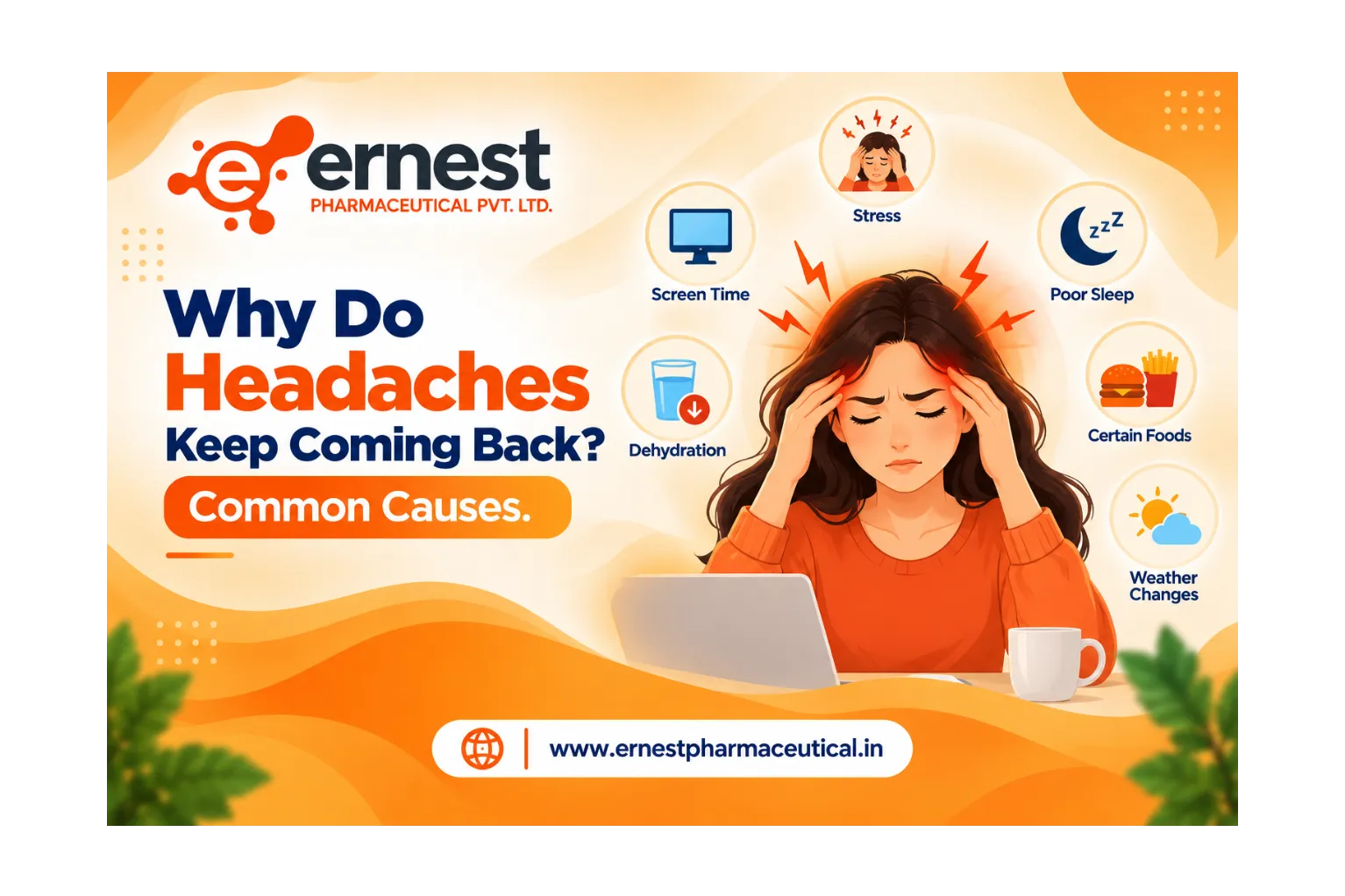
The accompanying infographic highlights six possible headache triggers: stress, screen time, dehydration, poor sleep, certain foods and weather changes.
These factors can contribute to headaches in susceptible individuals, although their effects vary.
1. Stress and Emotional Tension
Stress is often involved in tension-type headache and can precipitate migraine attacks. During stressful periods, people may experience muscle tension around the neck, shoulders and scalp.. Tension-type headaches often feel like a dull, pressing, or constricting sensation on both sides of the head.
However, not every stress-related headache is a tension-type headache.
2. Long Hours of Screen Time
Using computers, smartphones or tablets for extended periods can contribute to digital eye strain.
Symptoms may include tired eyes, blurred vision, dry eyes and headaches. Poor posture and prolonged neck positioning may also contribute to discomfort. Taking regular breaks, adjusting screen brightness and maintaining comfortable posture may help.
3. Dehydration and Irregular Fluid Intake
Some people may experience headaches when they do not drink enough fluids.
Dehydration can occur during hot weather, physical activity, illness or prolonged periods without sufficient fluids. Associated symptoms may include thirst, dry mouth, dizziness and dark-coloured urine.
Drinking enough fluid may assist when dehydration is contributing to the headache.
But don't attribute any severe or ongoing headache to dehydration without ruling out other explanations.
4. Poor Sleep and Irregular Sleeping Patterns
Sleep and headache disorders can influence each other.
Insufficient sleep, irregular sleep schedules and certain sleep disorders may increase headache frequency. Some people also experience headaches after sleeping substantially longer than usual. Maintaining a consistent sleep routine may help reduce headache triggers.
People who regularly wake with headaches, snore heavily or experience excessive daytime sleepiness may need evaluation for sleep-related conditions.
5. Certain Foods and Missed Meals
Food-related headache triggers differ between individuals. Some people with migraine report sensitivity to particular foods or beverages. Skipping meals or going for long periods without eating may also trigger headaches in susceptible individuals. Caffeine is another factor worth considering.Headaches can be caused by excessive consumption and withdrawal.
Rather than avoiding many foods unnecessarily, maintaining a headache diary can help identify patterns.
6. Weather and Environmental Changes
Some people report headaches during changes in weather, temperature or atmospheric pressure. Weather-related triggers are particularly discussed in relation to migraine. However, research findings vary, and weather does not affect everyone in the same way.
Strong smells, bright light and other environmental factors may also contribute to attacks in susceptible individuals.
Understanding the Different Types of Headaches
Headache type:
Tension-type headache
Migraine
Cluster headache
Medication-overuse headache
Secondary headache
Common characteristics:
Pressing or constricting pain, sometimes on both sides of the head
Recurrent bouts may be accompanied by throbbing pain, nausea or sensitivity to light and sound.
Severe pain, usually around one eye, occurring in repeated attacks
Frequent headaches associated with repeated use of acute headache medicines
Headache caused by another medical condition
Migraine vs Tension Headache: What Is the Difference?
Migraine and tension-type headache are two common primary headache disorders.
Tension-type headaches usually cause mild to moderate pressure-type discomfort and are not usually worsened by ordinary physical exercise.
The assaults can cause moderate to severe discomfort, typically with nausea or sensitivity to light and sound.
Not all migraines have an aura and the pain of a migraine isn't usually ONLY on one side of the head.
Some people experience both headache types.
A healthcare professional can assess symptoms and determine whether further investigation or specific treatment is appropriate.
Medicines Commonly Used for Headache Management
The choice of medicine depends on the headache diagnosis, symptom severity, medical history and other factors.
Paracetamol
Paracetamol is used to relieve mild to moderate pain and may be appropriate for certain headache episodes.
Excessive doses can cause serious liver injury.
Non-Steroidal Anti-Inflammatory Drugs
Medicines such as ibuprofen and naproxen may be used for certain headaches.
However, NSAIDs can increase the risk of gastrointestinal bleeding and kidney-related complications in susceptible patients.
Migraine-Specific Medicines
Triptans, such as sumatriptan, may be prescribed for selected migraine attacks.
These medicines are not appropriate for everyone, particularly people with certain cardiovascular conditions.
Preventive Headache Medicines
People with frequent or disabling migraine may be considered for preventive treatment.
Depending on the diagnosis and individual circumstances, doctors may prescribe medicines such as propranolol, topiramate or other migraine-preventive therapies.
Preventive medicines are not interchangeable with medicines intended for immediate headache relief.
Pharmaceutical Procurement Considerations for Indian Buyers
Indian pharmacies, wholesalers, hospital procurement departments and institutional buyers may handle several medicine categories used in pain and migraine management.
When sourcing pain relief medicines in India, buyers should verify the exact generic composition, strength, dosage form and manufacturer.
For migraine medicine procurement, it is also important to distinguish medicines used for acute attacks from those prescribed for prevention.
Additional procurement checks include batch traceability, expiry date, storage requirements, applicable licences and relevant product documentation.
A complete purchase enquiry should specify the medicine rather than simply requesting a general “headache tablet.”
Frequently Asked Questions
1. Why do headaches keep coming back?
Headaches that occur repeatedly may be related to migraine, tension-type headache, inadequate sleep, stress, dehydration, drug usage or other medical issues. Repeated headaches should be assessed when their pattern is concerning or they interfere with daily life.
2. Can too much screen time cause headaches?
Prolonged screen use may contribute to eye strain, neck discomfort and headaches. Regular breaks, appropriate screen settings and good posture may help.
3. What is the difference between migraine and a normal headache?
Migraine is a neurological disorder that can cause recurring headache attacks with symptoms such as nausea and sensitivity to light or sound. Other headache types, including tension-type headache, have different characteristics.
4. Can taking painkillers frequently cause recurring headaches?
Yes. Frequent use of certain acute headache medicines can contribute to medication-overuse headache. People who regularly need pain relief should seek professional advice.
5. Which medicines are commonly used for headache relief?
Depending on the diagnosis, treatment may include paracetamol, selected NSAIDs or migraine-specific medicines. Frequent headaches may require preventive treatment prescribed by a healthcare professional.
6. What should pharmaceutical buyers verify when sourcing headache medicines in India?
Buyers should confirm the generic composition, strength, dosage form, manufacturer, approved product information, batch details, expiry date and applicable regulatory documentation.
Keywords